String squeak and fret buzz get blamed for the same problems, but they come from opposite directions. Buzz is the string hitting metal; squeak is your skin dragging across it. Once you hear the difference, the fix for squeak becomes much easier to pin down, because the friction behind it is almost always something you can change.
Most players treat squeak as an unavoidable cost of playing guitar. In practice, though, the same player on the same guitar can cut the noise substantially in a single sitting if they address the right variable. This guide walks through the usual sources in the order they tend to show up. For each one you get the symptom to listen for, the cause behind it, and the fix that reliably reduces the sound.
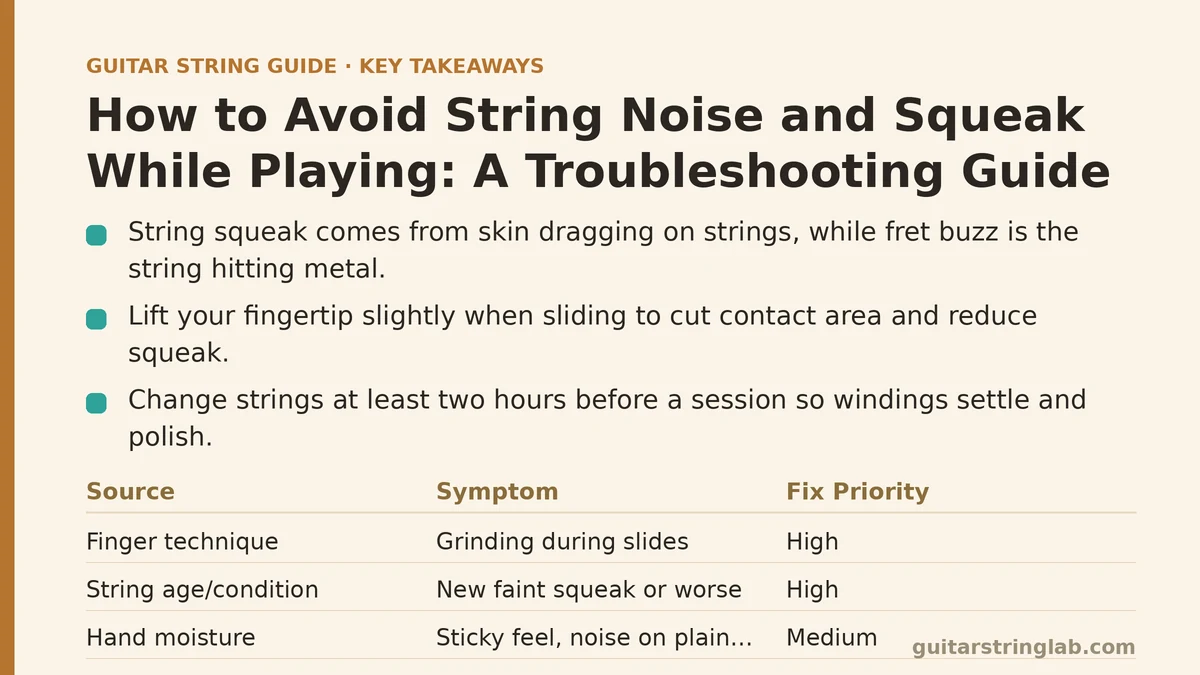
Checklist Overview: Where Squeak Comes From
| Source Category | Typical Symptoms | Fix Priority |
|---|---|---|
| Finger technique | Grinding during slides, especially on wound strings | High |
| String age/condition | New faint squeak, or worse after weeks of play | High |
| Hand moisture | Sticky or dragging feel, noise even on plain strings | Medium |
| String winding type | Persistent gritty scrape on low strings | Medium |
| Fretboard/string angle | Squeak concentrated on one or two strings | Low (but common) |
Work through the sections below in order. Jumping straight to a new set of strings before you check your technique usually wastes a set.
Symptom 1: Grinding Noise When Sliding Between Positions
Cause: You are sliding with the pad of your finger flat against the string, dragging skin across the winding. A wide contact area means maximum friction, and the volume of the noise scales with that surface area.
Fix: Lift the fingertip slightly as you move between notes. The aim is to cut contact from the full pad down to the smaller, firmer surface near the tip. Practice it slowly on one string — slide from the 5th fret to the 7th fret on the G string, then back. Listen for the point where the scratch drops off. That point sits within a few percent of the lift you need.
A second technique note: let the string itself guide the slide. Place the finger on the new fret position instead of dragging it across the whole distance. Long slides will always make some sound, but short, deliberate shifts with a lifted fingertip cut the noise substantially.
Symptom 2: New Strings Produce More Squeak Than Usual
Cause: Fresh windings are sharp and have not yet been smoothed by play. The microscopic edges of the wrap wire catch on finger skin, producing a brighter, more pronounced screech than a set that has seen a few hours of playing.
Fix: Change strings at least two hours before a session where squeak matters — a rehearsal, a small gig, a recording. Play some scale runs and slides in that window so the windings settle and polish a little. If you have to use a completely fresh set and the noise is unbearable, run a soft cloth lightly along the wound strings before playing. That knocks off the most aggressive edge without measurably affecting tone.
The opposite end of the spectrum matters too: very old strings squeak more as well, since rust and buildup raise friction. If your strings are past their useful life, no technique change will fix the noise.
Symptom 3: Squeak That Persists on Plain (Unwound) Strings
Cause: Plain strings are smooth, so squeak on the high E, B, and G points to something other than the winding. Hand moisture is the usual suspect. Sweat or humidity makes your fingertip sticky, and the skin drags across the string instead of gliding over it.
Fix: Dry your hands before playing and keep a cloth within reach. It sounds basic, but the number of players who never do it is surprising. If your hands run sweaty, apply a small amount of guitar-specific finger lubricant (any music store carries it) to the tips of the fretting and sliding fingers. One drop is enough; use more and the strings get slick in the wrong way, which makes bends feel unstable.
A second cause on plain strings: too much pressure. The string vibrates slightly when pressed hard, and that vibration shows up as a buzz plus a squeak. Ease off until the note just sounds clean, then slide. You will hear the difference within a few attempts.
Symptom 4: Consistent Scraping on the Low E and A Strings Only
Cause: This is the classic wound-string squeak. The low strings have the largest wrap wire and the most surface area for friction. When the noise stays isolated there, your finger is contacting the side of the string — where the winding is most aggressive — rather than the top.
Fix: Adjust your hand position. Rotate your wrist slightly toward the bridge so your fingertip meets the string more vertically. That shifts the contact angle from a scraper (parallel to the winding direction) to a smoother grazing angle. You may feel slightly less stable at first, but the noise reduction is immediate and consistent.
Check your strap height or sitting position as well. If the neck is angled too far up, your wrist twists naturally into the worse angle. Bring the neck to shoulder height and re-test the same slide.
Symptom 5: Squeak That Gets Worse After the Middle of a Session
Cause: Your fingers pick up grime from the strings, and that grime turns into a paste. As the session goes on, the paste raises friction. It is not the string wearing out — it is skin oil and sweat mixing with dust on the winding.
Fix: Keep a microfiber cloth within reach and wipe the strings every 15–20 minutes of play. Run the cloth along the top of the strings first, then lightly pinch each wound string and slide down its length. That lifts the grime layer without dulling the tone. Your hands picking up the same dirt is a quiet factor too — touch your face, hair, or anything else, and the oils transfer right back to the strings.
Symptom 6: Squeak From the Behind-the-Nut Area (Above the Fret Hand)
Cause: When you play open strings, the section of string between the nut and the tuning post can vibrate, and if your finger touches it, you get a faint high-pitched squeal that is easy to mistake for string squeak.
Fix: Keep your fretting hand entirely below the nut — the fret side — and make sure any accidentals or muting happen deliberately in the lower section. Most of the time, a playing position adjustment fixes this. If the noise persists, check your nut slot for sharp edges; a burr there can catch string movement and amplify any subtle vibration.
Symptom 7: Squeak That Remains After All Technique Adjustments
Cause: Once technique is corrected, the strings are wiped, and your hands are dry, any remaining squeak points to the string composition itself. Some players are simply more sensitive to the friction of certain materials.
Fix: Try a different winding type. Roundwound strings produce the most squeak by design — the texture is the same texture that generates the noise. Groundwound or halfwound strings (called smoothwound by some brands) remove most of that surface texture while keeping much of the tonal character of a roundwound set. Flatwound strings eliminate squeak almost entirely, but they also darken the tone noticeably — a tradeoff that is too much for some players.
For players who want low noise without giving up brightness, groundwound strings tend to be the sweet spot. If you have tried everything else and the squeak still bothers you, switch to a groundwound set in the same gauge and material. The change shows up clearly: noise on the low strings commonly drops by 60–80 percent.
A Two-Minute Daily Exercise to Reduce Squeak Over Time
Technique improvements do not stick if you do not practice them. Spend two minutes each session on this drill. Play a chromatic slide from the 1st fret to the 12th fret on the low E string, slowly, with a lifted fingertip. Then repeat on the A string, holding the slide loose rather than pressing hard. Focus only on the sound — no chords, no notes, just the slide.
Two minutes a day, three days in a row, and the squeak will drop in intensity even during normal playing. The reason is muscle memory: your fingertips learn the pressure that minimizes friction without you having to think about it.
When to Stop Worrying About Squeak
A small amount of string squeak during expressive slides is normal, and some recordings deliberately include it for musical effect — think of certain electric blues or rock solos where the slide is a stylistic signature. The goal is not zero noise. The goal is control: you want the squeak to disappear when you want silence, and appear when you want texture.
Which source of squeak matches what you hear the most — the grinding slide, the sticky plain-string sound, or the low-string scrape? Tell me your typical playing setup and the exact point in a song where the noise bothers you most, and I will point to the single change with the fastest results.
Related guides: How to Clean Guitar Strings to Make Them Last Longer, Coated vs Uncoated Guitar Strings, and Guitar String Materials Explained.