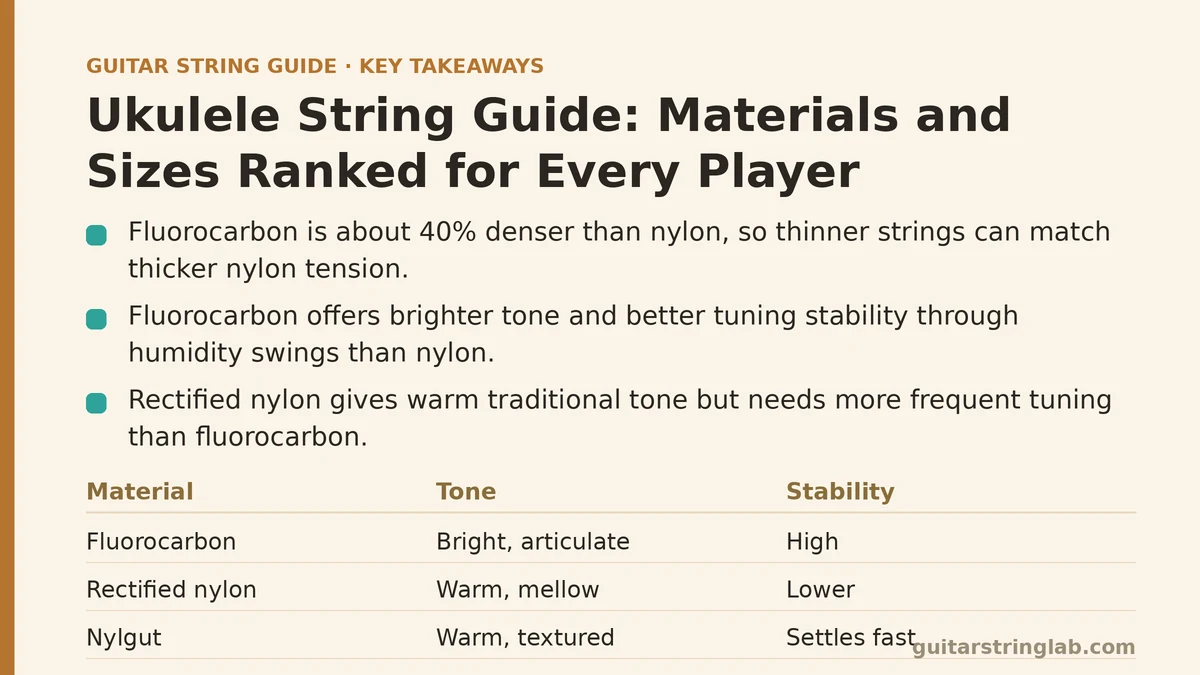
Fluorocarbon vs. nylon: one is denser, and that difference changes everything about how a ukulele feels in your hands. Fluorocarbon runs roughly 40% denser than nylon, so a thinner fluorocarbon string can hold the same tension as a noticeably thicker nylon one. That single property explains why two ukuleles strung with “the same gauge” from different material families can play like entirely different instruments. Plenty of players never pick up on this, and they end up chasing tone problems that a five-minute material swap would have fixed.
Ukulele strings behave nothing like guitar strings. There’s no steel core, most models have no wound bass strings, and gauge numbers seldom mean what you’d expect them to mean. What follows is a ranked look at the five material families you’ll run into in practice, plus how sizing shifts across soprano, concert, tenor, and baritone bodies. Ranking by real-world usefulness instead of marketing language should spare you a few wasted string changes.
The Five String Materials, Ranked
1. Fluorocarbon
Fluorocarbon takes the top spot for good reason: it produces brighter, more articulate tone than standard nylon while maintaining tuning stability much better through humidity swings. Brands like Worth and Living Water built their reputations on this material specifically because of how reliably it performs across different climates.
The density advantage counts for more than most players give it credit for. Since fluorocarbon packs more mass into a smaller diameter, thinner fluorocarbon strings can match the tension of thicker nylon strings without giving up volume. That makes it the default recommendation for beginners and gigging players alike — forgiving on the fingers, stable on stage.
One downside: fluorocarbon costs more per set, and to players who prefer nylon’s rounder, softer character, it can come across as slightly clinical.
2. Rectified Nylon (Clear Nylon)
Here’s the classic ukulele string sound — warm, mellow, a little soft on the attack. Rectified nylon is ground down to a consistent diameter, which sharpens intonation accuracy compared to older, unprocessed nylon strings, and it remains the standard pick for traditional Hawaiian tone.
Worth knowing: nylon reacts to temperature and humidity more than fluorocarbon does, so a nylon-strung ukulele needs more frequent tuning touch-ups, particularly when you’re moving between air-conditioned rooms and humid outdoor gigs. That’s less a flaw than a tradeoff — softer tone in exchange for less stability.
3. Nylgut and Synthetic Gut
Nylgut, developed by Aquila, aims to replicate the tone of historical gut strings without the durability issues that plagued gut. It delivers a warmer, slightly more textured sound than rectified nylon and has found a following among players chasing a vintage or traditional acoustic character.
Nylgut strings tend to settle into tune faster than standard nylon after installation, which helps if you’re restringing right before a session. The tradeoff shows up in the trebles, which often lose brightness sooner than fluorocarbon equivalents.
4. Wound Strings (Low G and Baritone Low Strings)
Wound strings only matter on low-G setups and baritone ukuleles, where a plain nylon or fluorocarbon string of adequate gauge would come across flabby and indistinct at that pitch. A wound low G — usually a nylon or composite core wrapped in silver-plated copper — gives that string real definition and volume rather than a dull thud.
The catch is feel. Wound strings add a texture under the fingers that reentrant-tuning players, accustomed to an all-plain-string set, sometimes dislike at first. Give it two or three sessions before writing it off; the adjustment period is real but brief.
5. Titanium
Titanium strings promise brighter tone and longer life than nylon, and in some cases they live up to both claims. But titanium’s tonal character divides people — some players hear clarity and projection, others hear a thin, almost metallic edge that fights the ukulele’s naturally warm voice.
This lands last not because it’s a bad product, but because it takes the most experimentation to figure out whether you’ll like it. Unlike fluorocarbon or nylon, there’s no safe default titanium set to recommend blind. Try before committing to a full set if you can.
Sizing: Why Gauge Numbers Don’t Transfer Across Ukulele Types
Guitar players coming to ukulele often figure a given gauge behaves the same way across instrument sizes. It doesn’t. Scale length shifts tension dramatically even when the string diameter stays the same, so a set built for a soprano can feel loose and lifeless on a tenor, or dangerously tight on a baritone.
Soprano (13" to 14" scale): Takes the lightest gauges in a maker’s lineup, usually thinner across all four strings. Standard fluorocarbon or nylon sets labeled specifically for soprano are calibrated for this shorter scale — dropping in a tenor set here often produces floppy, indistinct tone.
Concert (15" scale): Sits in the middle and handles the widest range of string sets without major tension problems. Most all-purpose ukulele string sets are voiced with concert scale as the baseline reference.
Tenor (17" scale): The longer scale raises tension at a given gauge, which is part of why tenors tend to sound fuller and louder than sopranos strung with the same material. Adding a low G to a tenor almost always calls for a dedicated wound low-G string rather than a plain one, since a plain string at that scale and pitch loses too much definition.
Baritone (19" to 20" scale, typically tuned DGBE): Closest to a guitar’s top four strings, and it needs the heaviest gauges by a clear margin. Wound low strings are standard here, not optional, and baritone-specific sets account for the longer scale’s added tension throughout.
Matching Material to Size: A Quick Reference
| Ukulele Size | Recommended Material | Notes |
|---|---|---|
| Soprano | Fluorocarbon or rectified nylon | Use soprano-labeled gauge specifically |
| Concert | Fluorocarbon | Most forgiving size for material experimentation |
| Tenor (high G) | Fluorocarbon | Bright, stable tuning under stage lighting and travel |
| Tenor (low G) | Fluorocarbon set with wound low G | Plain low G strings underperform at this scale |
| Baritone | Nylon or fluorocarbon with wound D and G | Behaves closest to a short-scale guitar set |
Treat this table as a starting point rather than a final answer — body wood, bridge design, and your own playing dynamics all shift how a given set feels once it’s under tension.
Picking Your First Set Without Overthinking It
If you’re restringing a ukulele for the first time and have no idea where to begin, fluorocarbon in the size-appropriate gauge for your instrument is the safest bet across nearly every playing style. It’s stable, articulate, and forgiving of humidity changes that would otherwise send a nylon set out of tune mid-session.
From there, let your ears make the next call. If the tone feels too bright or clinical after a few weeks, move to rectified nylon for warmth. If you’re adding a low G and the tone sounds thin, switch to a wound string before assuming the whole set is wrong. Small, single-variable changes tell you far more than swapping everything at once.
What size ukulele are you stringing, and are you running reentrant or low-G tuning? Tell me your setup and you’ll be pointed toward the specific gauge worth trying first.
Related guides: Guitar String Materials Explained, Guitar String Gauge Guide, and Nylon vs Fluorocarbon Classical Guitar Strings.